













AI in Asia’s Fields: A New Dawn for Farmers Big and Small
The rumble of change is echoing through Asia’s rice paddies, tea plantations, and bustling farmlands. It’s not the sound of a new tractor, but the quiet hum of Artificial Intelligence (AI) reshaping how food is grown. At Mazagri, we believe this isn’t just for mega-farms; it’s a powerful tool for every farmer, from the smallest plot to vast estates. Let’s dig into how AI is set to transform agriculture across Asia.
Asia: A Farming Powerhouse Facing Big Challenges
Asia is the heart of global agriculture, home to 60% of the world’s population and a vast majority of its smallholder farmers. These farmers, often managing less than two hectares, are the backbone of food security but face immense pressures:
- Climate Change: Unpredictable weather, droughts, and floods.
- Resource Scarcity: Limited land, water, and labor.
- Yield Gaps: Producing less than their potential due to lack of information or resources.
- Market Volatility: Price fluctuations that directly impact livelihoods.
This is where AI steps in – not to replace farmers, but to empower them.
How AI is Cultivating Change Across the Farm Size Spectrum
AI isn’t a single magic bullet; it’s a suite of technologies, and its applications are surprisingly diverse and scalable.
1. Precision Farming: Doing More with Less
Imagine knowing exactly how much water or fertilizer each part of your field needs. That’s precision farming powered by AI.
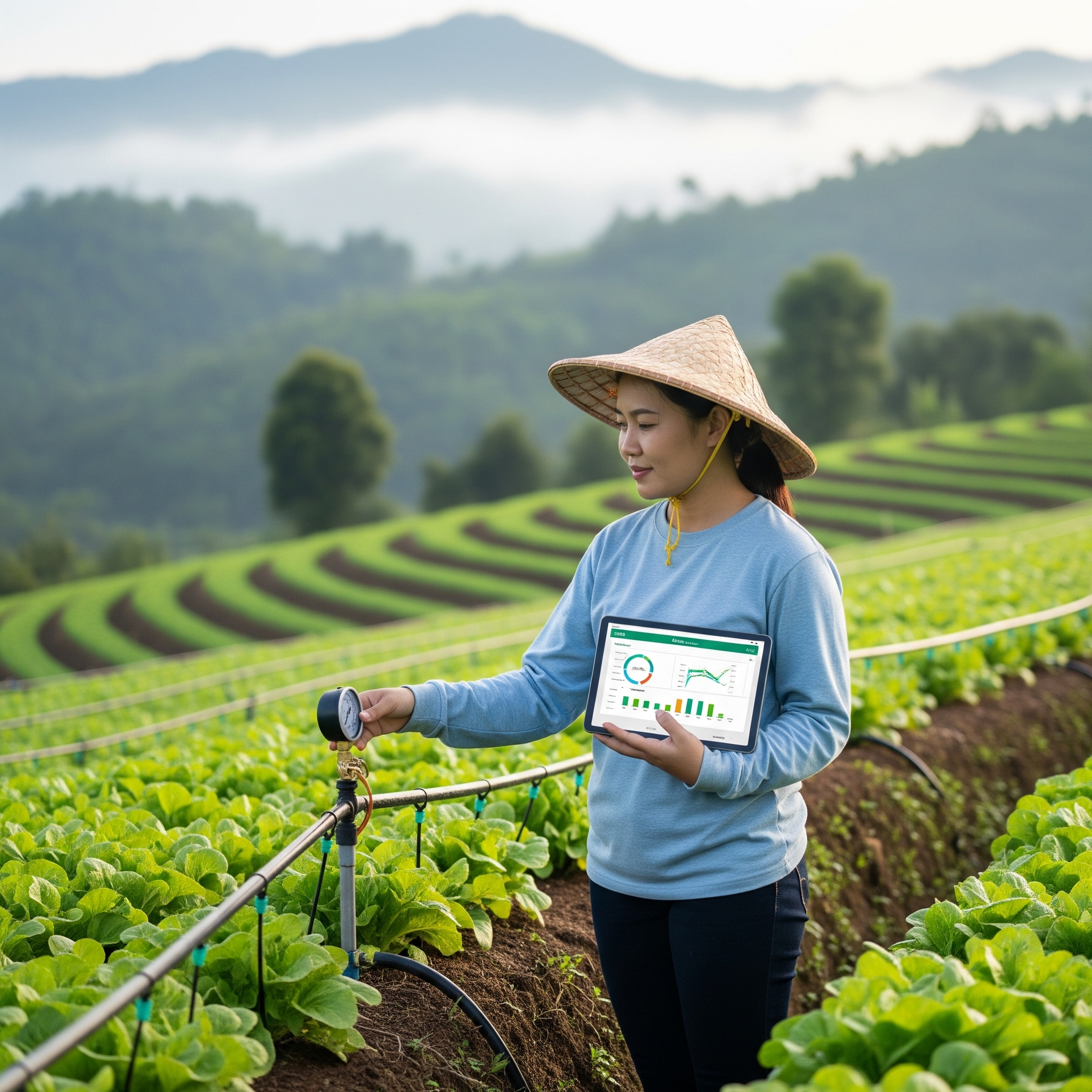
- For Smallholder Farmers: AI-driven smartphone apps (like those being piloted in India and Vietnam) can analyze photos of crops to detect diseases early, recommend optimal planting times based on local weather forecasts, or suggest precise fertilizer amounts. This reduces waste and boosts yields.
- The Data: Studies by the Food and Agriculture Organization (FAO) highlight that precision agriculture can reduce water usage by up to 30% and fertilizer use by 20%, directly benefiting small farmers with limited resources.
- For Large-Scale Operations: Drones equipped with AI cameras can scan vast fields, identifying stressed plants, weed infestations, or irrigation issues with incredible accuracy. AI then processes this data to guide robotic sprayers or intelligent irrigation systems, optimizing resource distribution across thousands of acres.
2. Smart Irrigation: Every Drop Counts
Water is gold in agriculture. AI systems use sensors in the soil, weather forecasts, and even satellite imagery to determine the exact water needs of crops.
- The Data: Research in regions like the Mekong Delta shows that smart irrigation can lead to water savings of over 25% while maintaining or even increasing crop yields, crucial for areas prone to drought.
3. Early Disease & Pest Detection: Preventing Disasters
Crop diseases and pests can wipe out entire harvests, a devastating blow for any farmer. AI offers an early warning system.
- For All Farmers: AI models trained on vast datasets of crop images can identify diseases or pest infestations often before a human eye can. Farmers can receive alerts on their phones, allowing for targeted intervention before the problem spreads.
- The Data: Early detection and precise treatment enabled by AI can reduce crop losses by 15-20%, according to reports from agricultural tech trials in Southeast Asia. This directly translates to higher income for farmers.
4. Yield Prediction & Market Access: Smarter Decisions
Knowing what your harvest will be and where to sell it makes a huge difference.
- For Smallholder Farmers: AI can predict future yields based on planting data, weather patterns, and historical performance. This helps farmers plan sales better and connect with buyers at optimal times, avoiding exploitation by middlemen.
- For Large-Scale Operations: Sophisticated AI models can forecast market prices, helping large farms make strategic decisions on when to sell, store, or process their produce to maximize profits.
5. Automated Operations: Efficiency on a New Level
While less common for smallholders now, robotics and automation powered by AI are growing for larger farms.
- Examples: AI-driven robots can perform precise weeding, harvesting delicate crops, or even milk cows automatically, reducing labor costs and increasing efficiency. This is particularly relevant in countries like South Korea and Japan, where an aging farming population faces labor shortages.
The Road Ahead: Bridging the Digital Divide
The promise of AI in Asian agriculture is immense, but realizing its full potential requires:
- Affordable Technology: Making AI tools accessible and cost-effective for smallholder farmers.
- Digital Literacy: Training farmers to use new technologies effectively.
- Infrastructure: Expanding internet and mobile connectivity in rural areas.
At Mazagri, our mission is to develop AI solutions that are not only powerful but also intuitive and accessible, ensuring that every farmer in Asia can benefit from this technological revolution. We’re committed to “Cultivating Tomorrow’s Harvest” by building smart tools for sustainable and profitable farming.